NYC Outdoor Living · Design Ideas
John Derian’s Storybook Motifs: Bringing Pattern to Urban Outdoor Spaces
A distinctive patterned seat can make a city home feel a little more personal—indoors, beside a garden door, or in a thoughtfully arranged sheltered setting. The secret is not to decorate every surface. It is to give one expressive piece room to tell its story.
Published November 5, 2026
In New York, outdoor living often begins with a question of scale. A narrow balcony, a compact terrace, a roof shared with building equipment, or a small patch of private garden has to work hard. There may be room for morning coffee and a few plants, but not for an elaborate furniture plan. That limitation can be liberating: one strong design choice can give the whole space a sense of identity.
John Derian’s decorative sensibility offers a useful point of reference for that kind of choice. His collaboration with Cisco Home brings character to upholstered seating, showing how pattern and silhouette can become the emotional center of a room. A memorable piece does not need to be surrounded by more memorable pieces. In fact, a calm setting often makes its details feel more vivid.
For an urban outdoor-inspired space, the idea is to borrow that balance rather than assume that every upholstered piece belongs outdoors. A patterned sofa or chair can help shape a room that opens onto a terrace, a sunroom, or a sheltered balcony. For furniture intended to live outside, check that its materials and construction are specifically suitable for outdoor exposure. Style can cross the threshold; weather resistance should never be taken for granted.
Let one piece set the mood
The easiest way to introduce a storybook feeling is to choose one focal point and let it lead. That could be a patterned upholstered seat, a sculptural chair, or another object with enough visual personality to hold attention. The rest of the room can respond in quieter ways: a simple table, restrained cushions, and a handful of plants with distinct shapes rather than a crowded collection.
Think of the focal piece as the opening sentence of the space. Everything around it should make the sentence easier to enjoy. If the upholstery is lively, look for supporting colors already present in its pattern and repeat one or two of them in small doses. A cushion, planter, or tabletop detail can create a subtle connection without turning the setting into a matching set.
This approach works especially well in a small NYC apartment, where visual clutter can make a limited footprint feel smaller. An expressive focal point gives the eye somewhere to land, while simpler surroundings preserve a sense of air. Instead of adding many decorative accents, edit carefully. Keep the pieces that contribute comfort, function, or a clear point of view, and let the remaining surfaces breathe.
- Choose one lead: Make a single seat or design detail the main event.
- Borrow color sparingly: Repeat a shade from the focal piece in one or two supporting elements.
- Leave open space: Clear floor area and uncluttered surfaces make pattern easier to appreciate.
- Keep use in mind: The setting should still feel comfortable for reading, meals, or conversation.
Pattern needs room to be read
Pattern is not only about color. It also has scale, rhythm, contrast, and density. A design with many small details may feel intimate close up but busy across a narrow balcony. A large, widely spaced motif can read more clearly from the doorway, though it may dominate if the seat takes up most of the available space. Before settling on a patterned piece, consider how it will look from the places where you actually see the space: the room entrance, the table, or the window.
Silhouette matters just as much. A rounded or softly upholstered form can temper a room of hard lines, while a crisp, tailored shape may suit an architecture with strong geometry. In a small footprint, pay attention to the visual weight of arms, backs, and legs. A piece with generous proportions can feel inviting, but if it blocks a walkway or crowds the only usable table, its decorative impact will come at a practical cost.
That is why measuring should happen before choosing a focal piece, not after. Note the full width and depth of the furniture, the path around it, and the space needed for doors, gates, or windows to open. If a balcony is particularly narrow, sketch a simple floor plan with the dimensions of the furniture marked in. A little planning can prevent a striking seat from becoming an obstacle.
Also consider the view beyond the space. A terrace may look onto brickwork, rooftops, tree canopies, or a neighboring building. A patterned piece can provide a welcoming foreground, but it should not compete with every element in the background. A restrained palette nearby—natural wood, muted textiles, or simple planters—helps create a composition that feels intentional instead of crowded.
Make the city backdrop part of the design
Urban outdoor spaces have a texture of their own. Brick, painted metal, concrete, glass, and weathered wood can all sit within a few feet of one another. Rather than trying to hide these materials, use them as part of the setting. A patterned seat can bring softness and a human scale to a hard architectural backdrop, while a straightforward table or planter gives the eye a quieter surface to rest on.
Contrast can be more effective than coordination. A detailed upholstery pattern beside plain masonry feels different from the same pattern surrounded by multiple prints and decorative objects. One is a considered focal point; the other can compete for attention. If the space already has a vivid view or colorful architecture, the pattern might be the accent. If the backdrop is visually quiet, the seat can take a more prominent role.
Plants help bridge the transition between indoor comfort and outdoor life. A leafy plant with broad leaves creates a different impression from an airy, upright plant, and a cluster of varied forms can add depth without introducing another printed surface. Choose plants according to the light, wind, and care you can provide. A shaded courtyard and an exposed rooftop have different conditions, so a good-looking arrangement should also be appropriate to its location.
Planters are useful supporting characters. Simple forms in terracotta, dark metal, or neutral tones can frame a patterned piece without pulling focus. If you want a more colorful planter, repeat its hue somewhere else in a very small amount. The goal is not perfect matching. It is a visual relationship that feels relaxed rather than overly arranged.
Indoor upholstery, outdoor inspiration
It is tempting to treat a sheltered balcony as an extension of the living room, especially when the two spaces share a door or a similar view. But shelter does not automatically make indoor upholstery suitable for outdoor use. Rain can blow sideways, sunlight can fade materials, and temperature changes and humidity may affect furniture over time. A roof or awning can reduce exposure, but it does not guarantee protection.
When considering an upholstered piece for an actual outdoor location, confirm its intended use and care requirements with the maker or seller. Ask about fabric performance, cushion construction, frame materials, cleaning guidance, and whether cushions should be brought inside when not in use. If those details are not specified, do not assume the item is designed for the weather. A design can be an inspiration for an outdoor palette or room-to-terrace transition without being outdoor furniture.
For a safer interpretation of the look, use an expressive upholstered piece in the indoor room and echo its colors outside with materials explicitly designed for exterior use. A durable outdoor cushion, a small table, or a planter can carry a related tone without pretending to be the same product. This creates continuity while respecting the different demands of indoor and outdoor settings.
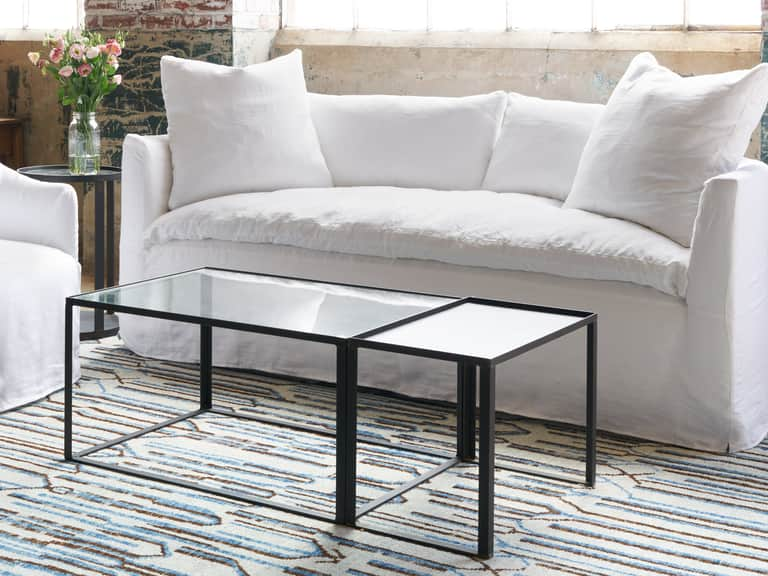
The Cisco Home Havana Sofa, for example, is described as an upholstered indoor sofa with an FSC-certified hardwood frame, removable legs, and slipcover options. Those details may make it relevant when thinking about a comfortable indoor area beside a terrace, but they do not establish that it is weather-rated. Treat it as an indoor furnishing unless the manufacturer confirms otherwise. Explore the Cisco Home Havana Loveseat and Sofa as an example of relaxed upholstered seating for an interior that can visually connect with an outdoor space.
Build a quiet supporting cast
Once the focal piece is chosen, supporting elements should earn their place. Start with the surfaces you need. A compact table can hold a cup, a book, or a small serving tray. A stool or bench may offer flexible seating when friends visit. On a narrow balcony, a piece that performs more than one function can be more useful than a collection of small accessories.
Materials can do some of the decorative work. Wood brings warmth; metal can reinforce an urban or architectural mood; woven textures can soften a setting. When mixing materials, use a limited palette and repeat each material with intention. A wood table and wood-toned planter, for example, can create a quiet thread through a patterned seating area. Too many competing finishes may make the space feel assembled rather than composed.
Lighting deserves attention, too, especially for a terrace used after work. A modest, appropriately rated outdoor light can make the setting feel inviting once the sun goes down. Always follow the product’s installation and safety instructions, and check building rules before adding permanent fixtures. If permanent wiring is not practical or permitted, portable lighting designed for outdoor use may offer a simpler alternative.
Keep accessories modest enough to move when the space needs to change. A terrace may be used for plants in the morning and dinner in the evening. Removable cushions, a small tray, and lightweight planters make it easier to reset the arrangement. The more compact the footprint, the more valuable that flexibility becomes.
A simple plan for a small balcony makeover
A useful makeover does not have to begin with shopping. Begin by observing the space at different times of day. Notice where the sun lands, whether wind gathers in a corner, where rain tends to collect, and which route you need to keep clear. In New York buildings, also check the rules that apply to the specific balcony, roof, or terrace. Building requirements can differ, and a design decision should not interfere with safe access or permitted use.
- Set the purpose. Decide whether the space is mainly for sitting, dining, reading, or tending plants. A clear purpose keeps the layout focused.
- Measure the footprint. Record the usable width and depth, then note door swings, railings, drains, and paths that must remain accessible.
- Select a focal point. Choose one expressive element for the adjoining room or covered setting, and decide how its color or shape could inform the outdoor area.
- Choose weather-appropriate pieces. For furnishings that will stay outside, verify the intended use, materials, and maintenance instructions.
- Add texture, not clutter. Use plants, a simple table, or one useful accessory to complete the arrangement.
- Review the result in use. Sit down, move around, and check whether the arrangement feels as practical as it looks.
This sequence helps keep the design grounded. It also leaves room for gradual changes. A balcony can develop over a season: begin with seating and one planter, then add a small table or lighting after you have learned how the space works. That measured approach is often more satisfying than trying to create a complete outdoor room at once.
Seasonal details that keep the look thoughtful
New York weather makes seasonal care part of the design conversation. Sun, rain, wind, and winter conditions can affect outdoor materials, and even sheltered areas may experience more exposure than expected. Follow the manufacturer’s maintenance guidance for every item used outside. Covers, storage, cleaning, and bringing cushions indoors may all be appropriate, depending on the product and location.
Seasonal changes can be visual as well as practical. In warm months, a few thriving plants may carry the color story. As the weather cools, simplify the arrangement and store anything that is not meant to remain outdoors. The indoor room can hold onto the more expressive patterns and softer textures, while the terrace shifts toward practical pieces suited to the season.
Careful editing is especially helpful before winter. Remove objects that can be displaced by wind, clear drainage areas, and follow building guidance for rooftop or balcony maintenance. Avoid assuming that a piece is safe to leave outside because it has survived one season. Materials can age gradually, and regular inspection gives you a chance to address wear before it becomes a problem.
The payoff: a space that feels like yours
Pattern can bring a sense of narrative to a city home. A storybook-inspired detail, an unusual silhouette, or a confident color choice can make an ordinary corner feel personal without demanding a complete redesign. John Derian’s collaboration with Cisco Home is a reminder that expressive character can live in the furniture itself, while the surrounding room remains comfortable and composed.
For urban outdoor design, the most successful interpretation is thoughtful rather than literal. Let one distinctive piece guide a palette indoors. Carry a color, a material, or a mood onto the terrace using pieces suited to outdoor conditions. Keep circulation clear, respect the scale of the space, and allow the view and architecture to remain part of the composition.
That balance is what makes a small balcony, sheltered terrace, or room beside the outdoors feel welcoming. It is not about filling every corner. It is about choosing details with care, leaving enough room to live, and creating a setting that feels unmistakably yours.
Quick takeaways
- Use one patterned or characterful piece as the focal point, not the start of a pileup of competing prints.
- Balance expressive seating with quieter colors, simple surfaces, and open floor space.
- Measure carefully and consider the view, circulation, sunlight, wind, and building requirements.
- Do not assume indoor upholstered furniture is suitable for outdoor use, even in a sheltered location.
- Carry a design idea from indoors to the terrace through related colors or textures in weather-appropriate materials.